
Why You Need a Motorcycle Accident Attorney

Disclaimer: This article is for informational purposes only and is not to be construed as legal advice. No attorney-client relationship exists based on the review of this article, and none of the information in this article constitutes legal advice.
When you hear the term “motorcycle accident attorney,” you might just picture any lawyer who handles car crashes. But that’s not quite right.
Your Guide Through the Aftermath of a Crash

The moments after a crash are a confusing, painful blur. Amid the shock and chaos, your life feels like it’s been turned upside down. In this critical time, a motorcycle accident attorney becomes your most crucial ally, helping you navigate the long road ahead.
Personal injury law is a focused practice area, so ask how much of an attorney’s work involves cases like yours.
A general-practice lawyer might know the basics of personal injury law, but a motorcycle accident attorney brings specific knowledge to your corner. They are familiar with the specific challenges that only riders encounter after a collision.
What an Attorney Brings to a Motorcycle Claim
Motorcycle claims can involve issues that differ from car-crash claims.
Here’s what sets them apart:
- They Understand Accident Physics: These attorneys know precisely how bikes behave in a wreck.
An attorney can explain your rights, help assemble documents, and present your claim.
Trying to handle a motorcycle accident claim by yourself is a huge gamble.
Without legal help, you could accept a settlement that does not reflect your future needs. An attorney can explain how evidence such as police reports and witness statements may be gathered. For a deeper dive, our detailed guide can provide additional clarity on what you need to know after being injured in a motorcycle accident in California. This frees you up to focus on the one thing that truly matters: your recovery.
Disclaimer: This article is for informational purposes only and is not to be construed as legal advice. No attorney-client relationship exists based on the review of this article, and none of the information in this article constitutes legal advice.
Critical First Steps After a Motorcycle Wreck
The moments after a motorcycle crash are a blur of chaos and confusion. Every action you take at the scene lays the groundwork for the case your motorcycle accident attorney will eventually build for you.
An adrenaline spike after a wreck is powerful, and it’s notorious for hiding serious injuries. Your absolute first priority is your health. Even if you think you can just walk it off, you need to get checked out by a medical professional right away. Injuries like internal bleeding or even a traumatic brain injury often don’t show symptoms immediately but can be incredibly dangerous.
After your health, focus on safety. If you can, get yourself and your bike out of the flow of traffic to avoid a second collision. Once you’re in a safe spot, it’s time to switch gears and preserve every piece of critical evidence you can.
Document Everything at the Scene
You need to become an investigator on the spot.
Use it to take a ton of photos and videos from every conceivable angle. Make sure you capture:
- Vehicle Damage: Get detailed shots of the damage to your bike and any other vehicles involved. Take close-ups of specific impact points and wider shots to show how the vehicles ended up.
- The Surrounding Scene: Snap pictures of everything. Skid marks, debris scattered on the road, traffic lights, road conditions, and even the weather. All these little details help paint a clear picture of how the accident unfolded.
- Visible Injuries: If you have any cuts, bruises, or road rash, photograph them immediately. This creates a timestamped visual record of the immediate physical toll of the crash.
Next up, get information from everyone. Politely ask for names, phone numbers, addresses, driver’s license numbers, and insurance details from every driver involved. If there are any witnesses, grab their contact info too.
This simple diagram shows how a legal professional typically approaches a case, starting with an initial meeting, then collecting evidence, and finally negotiating a settlement.
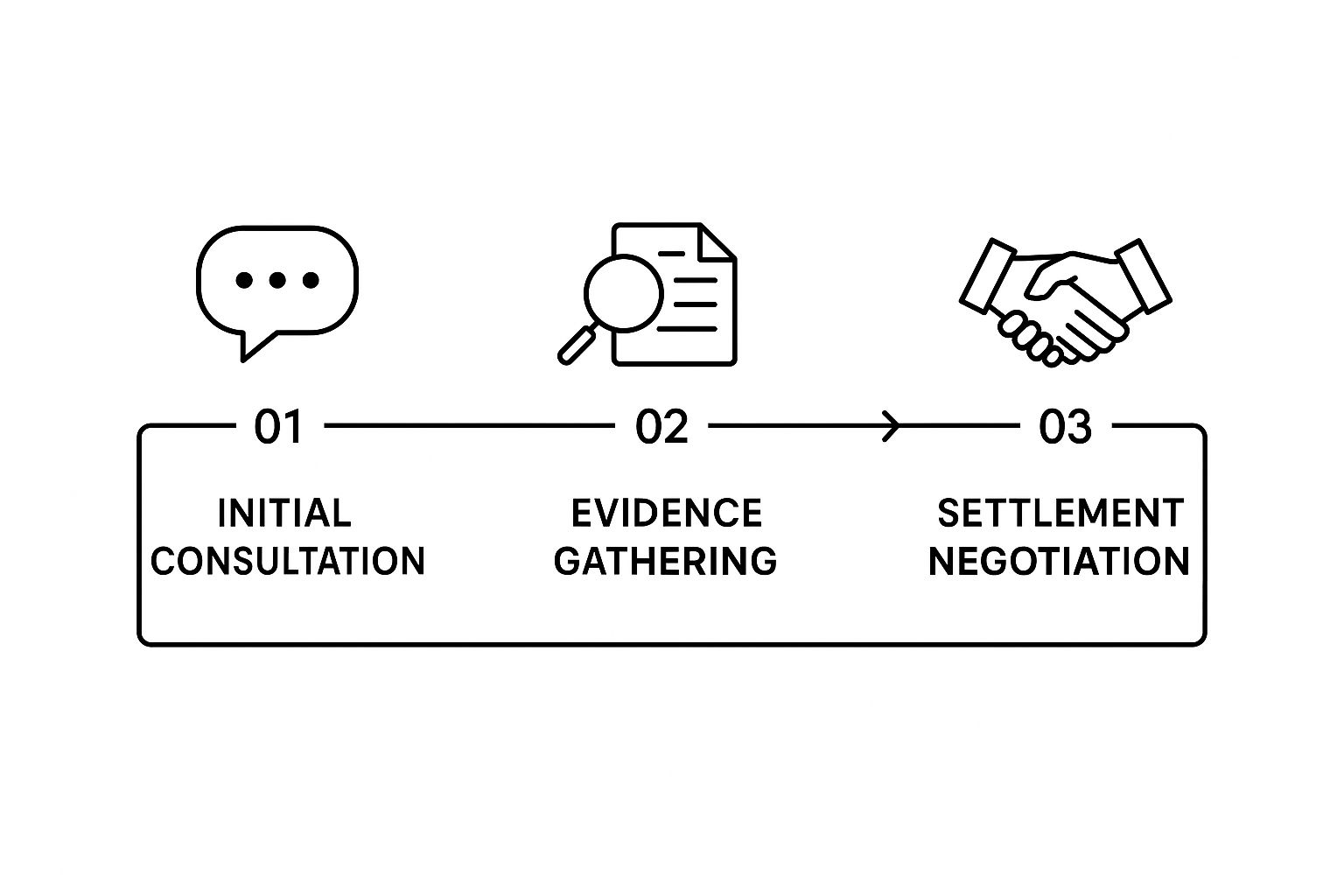 As you can see, the evidence you gather at the scene is the fuel that powers the entire legal process your attorney will manage for you.
The evidence you collect immediately after a crash is foundational. Here’s a quick checklist to help you remember what to gather to protect your rights.
Post-Accident Evidence Checklist
| Action Item | Why It’s Important |
|---|---|
| Photos & Videos | Captures the scene, vehicle damage, and injuries before anything is moved or cleaned up. |
| Witness Information | Provides objective, third-party accounts of what happened. |
| Other Driver’s Details | Essential for filing insurance claims and any potential legal action. |
| Police Report Number | The official report is a critical piece of evidence for insurers and courts. |
| Your Own Notes | Write down everything you remember while it’s fresh in your mind. |
This checklist isn’t just busywork; it’s about building a solid, record of the facts.
Interacting With Law Enforcement
When the police arrive, cooperate with them fully but be smart about it. Make sure they file an official police report, this document is the cornerstone of any insurance claim or lawsuit you might file later. Just give them the facts of what happened, clearly and calmly.
But be incredibly careful with what you say.
Never admit fault or even guess about what might have caused the accident. Stay away from saying things like “I’m sorry” or “I think I could have stopped sooner.”
Stick to what you know for sure. Explain what you saw and what you did, but don’t offer opinions about speed, who was at fault, or what the other driver was thinking. Your job is to provide facts, not assign blame. Let the evidence, and your future motorcycle accident attorney, do the talking.
By taking these deliberate steps, you protect both your physical well-being and your legal rights, giving yourself the strongest possible start on the road to recovery.
Disclaimer: This article is for informational purposes only and is not to be construed as legal advice. No attorney-client relationship exists based on the review of this article, and none of the information in this article constitutes legal advice.
How Insurance Companies Approach Rider Claims
Simply put, comparative negligence reduces your compensation by whatever percentage you’re found to be at fault. If they can convince a jury you were 10% responsible, your final settlement gets a 10% haircut.
An adjuster’s real job is to collect information they can use against you.
- The Quick low initial Offer: You might get a call shortly after the accident with what sounds like a fast, easy settlement.
- Pressuring You to Sign Waivers: They may send over complex medical release forms. Be careful. These documents often give them sweeping access to your entire medical history, which they’ll scour for any pre-existing conditions to blame for your pain.
They take over all communication with the insurance company, stopping you from accidentally weakening your own case and keeping the focus where it belongs: on the facts and the other driver’s negligence.
Riders have little protection in a crash, and the risk of serious injury is high.
Knowing these risks, and how the insurance industry operates, is crucial.
Disclaimer: This article is for informational purposes only and is not to be construed as legal advice. No attorney-client relationship exists based on the review of this article, and none of the information in this article constitutes legal advice.
Calculating the True Cost of Your Accident

After a motorcycle crash, the first bill you see is just the tip of the iceberg. The real cost runs much deeper.
To get a settlement that truly covers your needs, you and your attorney have to map out the full scope of your losses. In the legal world, these are broken down into two main categories of damages.
Understanding Economic Damages
The first type, economic damages, is the easy part to wrap your head around. Think of these as all the concrete, provable costs that popped up because of the crash. They’re the tangible losses you can stick a price tag on, both for today and for the future. A good lawyer’s job is to hunt down and document every single one.
Economic damages are the financial backbone of your claim. They’re meant to make you whole again by reimbursing every dollar you’ve lost, or will lose, because someone else was negligent. This goes way beyond the ambulance ride.
It’s a comprehensive list of expenses, including:
- Current Medical Bills: Every single cost tied to your immediate care, from the emergency room and surgery to physical therapy sessions and prescriptions.
- Future Medical Care: This is a huge one that often gets missed. It covers the care you’ll need down the road, like more surgeries, long-term rehab, or special medical equipment for your home.
- Lost Wages: All the paychecks you missed out on while you were recovering and couldn’t work.
- Diminished Earning Capacity: If your injuries mean you can’t go back to your old job or earn what you used to, this calculates the income you’ll lose over the rest of your career.
- Property Damage: The cost to get your bike fixed or replaced, plus your helmet, riding gear, and anything else that was destroyed.
Figuring out those future costs isn’t just guesswork. It often means bringing in medical and financial experts who can project your long-term needs and put a dollar amount on them. To get a more detailed breakdown, you can learn more about what economic damages are and how they are calculated in our in-depth guide.
Demystifying Non-Economic Damages
Next up are non-economic damages. These are more abstract but are just as real and just as important. This category is for all the personal, intangible ways the accident turned your life upside down.
Think of it as compensation for the human cost of the accident.
While you can’t put a price tag on suffering, the legal system recognizes that these losses are real and can be compensated. A motorcycle accident attorney knows how to build a compelling case to demonstrate the extent of these personal damages.
This bucket covers the profound ways the crash has affected you personally.
Common types of non-economic damages include:
- Pain and Suffering: This is compensation for the physical pain and genuine hardship you’ve had to endure.
- Emotional Distress: Covers the psychological fallout from the crash, like anxiety, depression, PTSD, or a new fear of riding.
- Loss of Enjoyment of Life: If your injuries keep you from doing the things you love, whether that’s hiking, playing with your kids, or just going for a ride, you can be compensated for that loss.
- Disfigurement or Scarring: Compensation for permanent physical changes that impact your appearance and confidence.
The vulnerability of riders is starkly reflected in accident data.
How to Choose the Right Attorney for Your Case
Picking your legal representation is probably the single most important decision you’ll make after a crash.
Look for Relevant Experience in Motorcycle Cases
Your first filter should be specificity. When you start your search, look for law firms that make their work with injured riders a central part of their practice.
This specific knowledge is everything. They’ll know the state traffic laws that apply directly to motorcycles and how to use them to build your case.
The right attorney is more than just a legal representative; they are a compassionate partner you can trust throughout a difficult journey. Their role is to combine litigation with genuine support.
A confident and motorcycle accident attorney will have no problem discussing their history with cases just like yours.
Essential Questions for Your Consultation
Think of the initial consultation as an interview. You are hiring them for a critical job, so it’s a two-way street. Come prepared with a list of questions that cut straight to what matters for your case.
Here are some crucial questions to get you started:
- Have you taken motorcycle accident cases to trial?
- How will you communicate with me about my case? Get a clear picture of their update process and who your main point of contact will be. Good communication is key.
- Can you explain your fee structure in detail? Make sure you get a clear, written agreement that spells out the contingency fee percentage and how case expenses are handled. No surprises.
Their answers should give you a gut feeling about their experience, communication style, and transparency.
Red Flags to Watch Out For
Knowing what to avoid is just as important as knowing what to look for.
Be on the lookout for these warning signs:
- If they do, run.
- Lack of Trial Experience: If an attorney has never argued a motorcycle case in front of a jury, the insurance company holds all the cards. They know there’s no real threat of a lawsuit.
Choosing a motorcycle accident attorney is a deeply personal decision. Trust your gut. You need a professional who not only has the right skills but also makes you feel heard, respected, and confident about the road ahead.
Disclaimer: This article is for informational purposes only and is not to be construed as legal advice. No attorney-client relationship exists based on the review of this article, and none of the information in this article constitutes legal advice.
Common Questions About Motorcycle Accident Claims

After a motorcycle crash, your head is probably spinning with a million questions and concerns. The road ahead can feel uncertain, leaving you and your family feeling stressed out and vulnerable. This section is here to give you clear, straight-shot answers to some of the most pressing questions we hear from riders every day.
Our goal is to pull back the curtain on the legal process and give you the confidence you need to protect your rights. Just remember, every wreck is different. Think of these answers as a starting point, not a substitute for advice tailored to your specific situation.
How Much Does a Motorcycle Accident Attorney Cost?
Many motorcycle accident attorneys work on a contingency fee basis.
It is worth asking how fees and case costs work and getting the terms in writing.
Before you sign anything, make sure you get a clear, written agreement that spells out this percentage and explains how case-related costs are handled.
How Long Do I Have to File a Lawsuit?
Every state has a strict deadline for filing a personal injury lawsuit, and it’s called the statute of limitations.
These deadlines vary from state to state, but they’re often two or three years from the date of the crash. Some situations can shorten or even extend this period. For instance, claims against a government agency often have much tighter deadlines.
Because the statute of limitations is so unforgiving, it is critical to speak with a motorcycle accident lawyer as soon as you can after a wreck. They will make sure all the necessary paperwork is filed long before your time runs out.
What if the Accident Was Partially My Fault?
Even if you think you might have been partly to blame for the crash, don’t ever assume you don’t have a case. Most states use a legal concept known as comparative negligence. This system allows you to recover money for your injuries even if you share some of the fault.
Here’s a quick example. Let’s say a jury decides you were 20% at fault for the collision, and your total damages add up to $100,000. Under comparative negligence, you could still walk away with $80,000, your total award minus your percentage of fault.
Should I Take the Insurance Company’s First Offer?
The answer to this is almost always a hard no.
Once you accept a settlement and sign that release form, it’s over. You give up all rights to seek more money for that accident, even if your condition gets worse down the road.
Conversations with a lawyer you consult about your case are generally confidential. Damages depend on the facts of your case, and a licensed attorney can explain which categories may apply.
Major factors in serious motorcycle crashes include helmet non-use, speeding, and alcohol.
The legal road after a motorcycle accident is complex, but you don’t have to travel it alone. For a consultation to discuss your case, visit us at https://www.bizlawpro.com.
Disclaimer: This article is for informational purposes only and is not to be construed as legal advice. No attorney-client relationship exists based on the review of this article, and none of the information in this article constitutes legal advice.
Attorney Advertising. This article is general information, not legal advice, and does not create an attorney-client relationship. Prior results do not guarantee a similar outcome.